

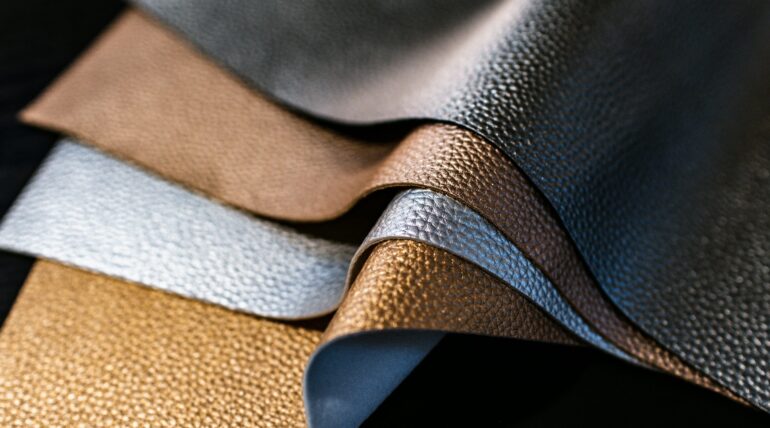
The leather and synthetic leather industry in India is undergoing a significant transformation, driven by an increasing demand for high-performance yet environmentally responsible materials. At the heart of this evolution lies the sophisticated chemistry of polyurethane (PU) resins. This blog post, brought to you by Roidec, explores the critical role of advanced PU resin for leather finishing India and highlights the emergence of sustainable resin for PU synthetic leather Gurgaon. We will delve into how these modern resin technologies are setting new benchmarks for durability, aesthetics, and, most importantly, ecological compliance, providing manufacturers with the tools to meet global standards and consumer expectations for greener products. Understanding these advancements is crucial for any player in the textile and leather goods market looking to stay competitive and sustainable.
The Indispensable Role of PU Resin in Enhancing Leather Quality
The application of PU resin for leather finishing India is not merely an aesthetic choice; it is a fundamental process that imparts the final critical properties to both genuine and synthetic leather products. Polyurethane resin forms a protective topcoat or binder layer that is essential for the material’s longevity and tactile appeal. This final coating determines crucial factors such as resistance to abrasion, scratch-resistance, and the feel – or ‘hand’ – of the leather. High-quality PU resins provide exceptional flexibility and tensile strength, preventing the finished leather from cracking or peeling, which is a common failure point for lower-grade materials. In the demanding climate and usage conditions across India, the durability provided by a superior PU resin for leather finishing India becomes even more significant, ensuring that products like footwear, upholstery, and accessories maintain their quality and appearance over an extended lifespan. By engineering these polymer structures with precision, manufacturers can achieve finishes ranging from a deep, high-gloss sheen to a sophisticated, matte look, all while guaranteeing superior performance.
Embracing Sustainability with Advanced Resin Technology in Gurgaon
The manufacturing hub of Gurgaon is fast becoming a pioneer in adopting eco-conscious industrial practices, particularly in the production of synthetic leather, and this shift is fundamentally tied to the use of advanced resin systems. The industry is moving decidedly away from traditional solvent-based resins, which are associated with high levels of Volatile Organic Compound (VOC) emissions, towards non-solvent and water-based solutions. Sustainable resin for PU synthetic leather Gurgaon represents this next generation of materials. These water-borne polyurethane dispersions (PUDs) use water as the primary solvent, drastically reducing the release of harmful chemicals into the atmosphere, aligning with both stricter environmental regulations and the ethical demands of the modern market. For companies manufacturing PU synthetic leather in this region, utilizing sustainable resin for PU synthetic leather Gurgaon is a dual win: it minimizes their environmental footprint, thereby improving worker safety and community health, and simultaneously enhances the marketability of their products to global buyers who prioritize sustainability and traceability in their supply chains. The commitment to such innovative, eco-friendly chemistry is a defining characteristic of forward-thinking manufacturers.
The Competitive Edge of Water-Based PU Resins
Beyond simple compliance and goodwill, the transition to water-based PU resin for leather finishing India offers substantial technical and competitive advantages. These modern resins boast inherent qualities that improve the final product while streamlining the manufacturing process. For instance, water-based PUDs often provide superior adhesion to various substrates and can be formulated to create a lighter, more breathable synthetic leather. This breathability is a significant factor in consumer comfort, particularly in products like clothing and automotive seating, where real leather has historically held an advantage. Furthermore, the handling and cleanup of water-based systems in the production environment are considerably simpler and safer than their solvent-based counterparts. Roidec, as a leader in this domain, specializes in high-performance water-based PU emulsions that ensure manufacturers don’t have to compromise on film strength, abrasion resistance, or aesthetic quality when choosing an environmentally friendly option. This combination of performance, safety, and reduced environmental impact offers a clear competitive edge in the highly saturated global leather and textile market.
Key Benefits of Transitioning to Water-Based PU Solutions
For leather and synthetic leather producers, particularly those operating in and around major industrial clusters, the switch to advanced water-based systems brings a multitude of practical and strategic advantages. It is a decision that impacts not just the product quality but the entire operational and commercial structure of the business.
Here are the key benefits of adopting advanced water-based PU resin for leather finishing India offered by experts like Roidec:
- Significant Reduction in VOC Emissions: Water-based formulations dramatically cut down on harmful Volatile Organic Compound releases, making factory environments safer and ensuring compliance with stringent local and international environmental mandates.
- Enhanced Fire Safety: The absence of flammable organic solvents significantly lowers the risk of fire in manufacturing and storage facilities, contributing to a much safer operational environment.
- Superior Film Performance: Modern water-based PU resins are engineered to provide exceptional film properties, including high elasticity, excellent flex-resistance, and resistance to hydrolysis, which directly contributes to the final product’s long-term durability.
- Improved User Comfort: These resins often produce a finish that is softer and more breathable than older, solvent-based coatings, thereby improving the comfort level of finished goods such as apparel and seating.
- Ease of Application and Cleanup: The non-flammable and water-soluble nature of these resins simplifies handling, reduces the need for specialized solvent-based cleaning agents, and generally makes the entire coating process more efficient.
Expert Tips for Integrating Sustainable PU Resin
Successfully integrating a sustainable resin for PU synthetic leather Gurgaon requires careful planning and a deep understanding of the new material’s unique characteristics. It’s a process that moves beyond merely substituting one chemical for another; it involves optimizing equipment and procedures to harness the full potential of water-based chemistry. This forward-looking approach ensures that the investment in sustainability translates into maximum product quality and efficiency.
Here are expert tips for manufacturers looking to successfully integrate Roidec‘s sustainable resin systems into their production:
- Conduct Comprehensive Compatibility Testing: Always verify the compatibility of the new water-based PU resin with existing chemical auxiliaries, color pastes, and base materials to prevent adhesion or stability issues in the final product.
- Optimize Drying and Curing Parameters: Water-based systems require careful control of drying temperature and humidity to ensure the water evaporates efficiently and the polymer film cures completely, maximizing physical properties like tensile strength and abrasion resistance.
- Ensure Proper Storage and Handling: Water-based emulsions are susceptible to freezing and should be stored within a specific temperature range to prevent coagulation, which is vital for maintaining product quality and shelf-life.
- Calibrate Equipment for Viscosity: Water-based PU resins often have different viscosities compared to solvent-based counterparts. Adjusting spray nozzles, roll coaters, or gravure printing equipment is necessary to ensure uniform film thickness and a flawless finish.
- Prioritize Employee Training on Green Chemistry: Invest in training production staff to understand the fundamental differences and best practices for working with water-borne chemistry, emphasizing environmental safety protocols and the new process requirements.
- Maintain Consistent pH Monitoring: The stability of water-based PU dispersions can be sensitive to pH levels. Regular monitoring of the emulsion and any mixed finishing compounds is essential for preventing premature breakdown.
Conclusion
The shift towards advanced PU resin for leather finishing India and the embrace of sustainable resin for PU synthetic leather Gurgaon marks an important turning point for the Indian leather industry. The forward-thinking approach, spearheaded by companies like Roidec, is proving that high-performance, aesthetically pleasing, and durable leather and synthetic leather can – and must – be produced with a minimal environmental footprint. By leveraging state-of-the-art water-based polyurethane technology, manufacturers are not only meeting the increasingly strict compliance demands but are also positioning themselves as leaders in the global movement toward sustainable manufacturing. Choosing the right resin is choosing a future of excellence and responsibility. We invite you to explore the full range of Roidec‘s advanced, water-based solutions to begin your transition to a greener, higher-performing product portfolio today.
FAQs
1. How does PU resin improve the durability of leather?
PU resin acts as a protective topcoat, providing a durable, flexible, and abrasion-resistant film. This layer dramatically enhances the leather’s resistance to scratching, cracking, and peeling, which is essential for the long lifespan of finished products.
2. What are the main benefits of using water-based PU resin for leather finishing India?
The primary benefits include a significant reduction in VOC emissions, improved workplace safety due to the absence of flammable solvents, and the ability to produce a final product with excellent physical properties and a soft, comfortable feel.
3. Why is sustainable resin for PU synthetic leather Gurgaon gaining prominence?
It is gaining prominence because it addresses the global demand for eco-friendly materials. Manufacturers in Gurgaon are adopting sustainable, water-based resins to reduce their environmental impact, ensure regulatory compliance, and appeal to international markets and eco-conscious consumers.
4. Is water-based PU resin as durable as traditional solvent-based resin?
Yes, modern water-based PU resins are engineered with advanced chemistry to match or even surpass the durability of solvent-based systems, offering superior features like high flex-resistance, hydrolysis resistance, and film strength without the environmental drawbacks.
5. Can Roidec’s PU resins be used for both genuine and synthetic leather?
Absolutely. Roidec offers a specialized range of water-borne polyurethane emulsions and dispersions designed to be versatile, providing customized finishing solutions for various substrates, including genuine leather and different types of synthetic leather.
6. What exactly are VOCs, and why do water-based resins reduce them?
VOCs, or Volatile Organic Compounds, are harmful chemicals released into the air by traditional solvent-based resins. Water-based resins use water as the primary carrier, which evaporates cleanly, drastically reducing or eliminating the release of these toxic compounds.
7. How does the application of a PU resin for leather finishing India affect the feel of the leather?
The resin is key to the leather’s ‘hand’ or feel. Manufacturers can choose resins that create a wide range of tactile finishes, from extremely soft and flexible to firmer and textured, all while ensuring breathability and comfort.
8. Are there any specific storage requirements for water-based sustainable resin for PU synthetic leather Gurgaon?
Yes, water-based PU emulsions must be stored correctly, typically above freezing temperatures and below a maximum limit, and protected from direct sunlight to maintain their stability and prevent the polymer from coagulating or separating.
9. How does Roidec ensure the quality and consistency of its PU resin products?
Roidec ensures quality through state-of-the-art manufacturing facilities, rigorous quality control testing at every stage, and a commitment to advanced polymer science research and development to maintain the highest levels of performance and environmental safety.
10. What is the future outlook for PU resin for leather finishing India regarding sustainability?
The future outlook is clearly focused on sustainability. The industry is rapidly moving toward 100% solvent-free and even bio-based PU resin formulations to achieve a truly circular economy model, with regional manufacturers driving this change.


